Descriptive Text Part 1
💕 Historical Buildings 💕

🍦 Definition Descriptive Text 🍦

Descriptive text is a type of text that aims to explain or describe a person, animal, place or thing. Generally, what is described is the shape, feature, or nature.
🌟 Generic Structure About Descriptive Text : 🌟

The structure of descriptive text is as follows:
♤ Identification : ♤
identification of the object or thing to be described.
♤ Description : ♤
information on the characteristics of the object, such as psychological characteristics of behavior, physical appearance, and others specifically.
🎋 Linguistic Elements : 🎋
Descriptive text usually uses the following linguistic elements:
●》Noun : a specific noun
for example : my best friend, my dog, Borobudur Temple, and others.
In addition, sometimes also use nouns that get adjectives,
for example : an intelligent student and a big garden.
●》Simple Present Tense :
uses the first form of verbs (verb1) and also verbs that can describe the state of an object or indicate ownership,
for example : my house has 2 living rooms, Sinta is beautiful, and others.
●》Adjective :
adjectives are used to describe objects.
●》Figurative Language : using figurative language such as similes or metaphors as a way of providing comparative illustrations,
for example : My throat is as dry as a dessert.
Her skin is as white as cloud and smooth as water.
🌸 Definition Historical Buildings 🌸
Definition Historical Buildings in the text description is to describe a place based on reality.
🍥 Generic Structure Historical Buildings : 🍥
1. Introduction (Introduction)
This section is the opening of a text, which provides brief information about the name and location of the location that we are going to tell.
Example : what makes the place famous, what makes the place special, and so on.
2. Main Body (Core)
The main body is part of the core of the story that describes the place/building that was told. The essence of this story usually starts from telling the general part, then just tells the specific part so that it will become a conical story.
For example : when we tell about a place, we can start from the overall characteristics of a place such as how the scenery, the buildings, the weather, etc., then refer to the details that specifically explain the previous general explanation.
3. Conclusion (Conclusion)
This conclusion is the conclusion of the author after visiting these places. that describes your feelings, or opinions of these places, you can also provide recommendations for readers who will visit these places.
🌹 Social Function of Descriptive Text :🌹
( Historical Buildings )
The Social Function of Descriptive text ( Historical Buildings ) is to describe a particular place
🎷 Vocabulary that can be used in Historical Buildings : 🎷
• Ancient = Kuno/langka
• Beautiful = Indah
• Charming = Indah
• Exciting = Menyenangkan
• Famous = Terkenal
• Fantastic = Fantastis
• Fascinating = Menarik
• Huge = Besar/luas
• Historic = Bersejarah
• Lively = Hidup
• Popular = Terkenal
• Touristic = Wisata
• Peaceful = Damai
• Stunning = Menakjubkan
• Rural = Pedesaan
• Mountainous = Pegunungan
• Perfect = Sempurna
• Amazing = Luar biasa
• Calm = Tenang
• Creepy = Menyeramkan
• Deserted = Area Gurun
• Different = Berbeda
• Fresh = Segar
• Hot = Panas
• Incredible = Luar biasa
• Interesting = Menarik
• Modern = Modern
• Mysterious = Misterius
• Natural = Alami
• Pleasant = Menyenangkan
• Unique = Unik
👇 Example Historical Buildings in Indonesia : 👇
Candi Borobudur, Yogyakarta

Gereja Katedral, Jakarta

The next historical building in Indonesia comes from the Jakarta area. The Jakarta Cathedral Church or officially the Church of Santa Maria was elevated to heaven was inaugurated in 1807 when Pope Pius VII appointed Pastor Nelissen as apostolic prefect of the Dutch East Indies. This building was made with the help of European architecture with a neo-gothic theme with a floor plan resembling a cross. The building is made to resemble church buildings at that time made of thick bricks made to resemble the original natural stone motifs.
Monumen Nasional, Jakarta
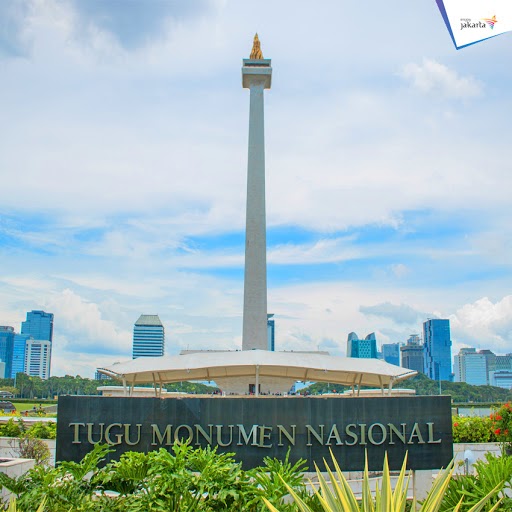
Now turning to the capital city of Jakarta, namely the National Monument known as Monas. The National Monument (Monas) is a historic building in Indonesia that was built as a memorial to commemorate the services of the previous heroes who had defended their homeland from the Dutch East Indies colonial rule. Under the orders of Indonesia's first president, Soekarno, the construction of this monument began on August 17, 1961 and opened to the public on July 12, 1975. The interesting thing about this monument is the original gold layer that surrounds the crown of fire located at the top of the monument.
Jam Gadang, Bukittinggi

Masjid Baiturrahman, Aceh

One of the historical buildings in Indonesia was built by Sultan Iskandar Muda Mahkota Alam in 1622. This mosque has become one of the centers of Islamic learning that has been visited by people from all over the world. However, after that in 1873 there was a war when the second Dutch aggression burned this mosque and it was rebuilt in 1877. Now, this mosque has become a symbol of religion, culture, strength, the struggle for nationalism of the Acehnese people and became one of the buildings that survived the Aceh Tsunami. in 2004.
Benteng Fort Rotterdam, Makassar

A historic building in Indonesia called Fort Fort Rotterdam. Known as Turtle Fort because of its shape that resembles a turtle crawling towards the ocean, this fort now houses historical objects from the Gowa-Tallo kingdom.
Address at Jalan Ujung Pandang, Bulo Gading, Kec. Ujung Pandang, this building used to function alternately from being used as a storage place for spices looted from Eastern Indonesia, a defense command headquarters, a trade office to the center of government in the eastern part of the archipelago. The interesting thing is that besides the European architectural style building, there is a room that is believed to be the exile place of Prince Diponegoro during his struggle.
Museum Fatahillah, Jakarta

Located at Jalan Taman Fatahillah No. 1, West Jakarta, Fatahilah Museum is one of the historic buildings in Indonesia which stands on a land area of 1,300 square meters. This building, which resembles the Dam Palace in Amsterdam, was the city hall of Batavia in 1707 – 1712 under orders from the Governor General of the Dutch East Indies, Joan Van Hoorn.
This historic building was used for administrative offices and the court council in its time Located at Jalan Taman Fatahillah No. 1, West Jakarta, Fatahilah Museum is one of the historic buildings in Indonesia which stands on a land area of 1,300 square meters. This building, which resembles the Dam Palace in Amsterdam, was the city hall of Batavia in 1707 – 1712 under orders from the Governor General of the Dutch East Indies, Joan Van Hoorn. This historic building was used for administrative offices and the court council in its time.
Exercise About Historical Buildings
Activity 3 :
1. Write a descriptive text, describing historical buildings, minimal 4 paragraph and attach picture in each paragraph and publish it in your blog
Lawang Sewu

The building from the city of Semarang which is located on Jalan Pemuda Sekayu, Semarang is one of the historic buildings in Indonesia owned by PT Kereta Api Indonesia (Persero). With so many doors and windows in the building, the name of this building is Lawang Sewu, which means a thousand doors. Used as the headquarters of the Indonesian railway company from ancient times, the Lawang Sewu museum presents a wide collection of Indonesian railways from time to time.
Lawang Sewu in Indonesian means "Thousand Doors". Semarang residents call it that because the building has a door and a large window doors that resembles a very large number. This building was designed by Dutch architect JF C. Citroen of Firma Klinkhamer and B.J. Quendag in 1903 and was completed in 1907. This building was originally used for offices Spoorweg Nederlands-Indische Maatschappij or NIS, the Dutch railway company.
The front of this historic building decorated by the twin towers and gothic models are divided into two, extending rearward impressive solid, big and beautiful. Lawang Sewu architectural art deco style is characterized by a growing exclusively in the era of 1850-1940 in continental Europe.
The building overlooks the Wilhelmina Park is now better known as complex Tugu Muda. In front of Lawang Sewu first tram rails crossing the city of Semarang, majoring fur â € "Jomblang. Aerial photos taken in 1927 still shows this perangkutan track.
After Japan took over the Dutch in Indonesia in 1942, the basement of this building which was formerly a sewer in the "magic" into the dungeon at once sewer water. The house is also a silent witness to a fierce battle between the people of Indonesia to the Japanese army known as the Battle of Five Days in Semarang (October 14, 1945 - October 19, 1945). To commemorate the historic event, a few years later, the government built a stele in the courtyard Wilhelmina Park is now known as Monument Muida
Ancient buildings and magnificent two-story after independence used as Indonesia Railway Bureau office (DKARI) or now PT Kereta Api Indonesia. Moreover once used as the Office of National Infrastructures Regional Military Command (Kodam IV / Diponegoro) and Regional Office (Regional Office) Department of Transportation Central Java.
Given Lawang Sewu has important historical value, then the Government of Semarang with SK Wali Kota 650/50/1992, enter Lawang Sewu as one of the 102 ancient or historic buildings in the city of Semarang that should be protected.
Currently Lawang Sewu is under renovation to repair parts of buildings that have been damaged due with age.

🍁 Video Material About Historical Buildings In The Descriptive Text 🍁
🍒 My Video About Historical Buildings 🍒
That's all the explanation from my blog. hopefully it can be understood and get benefits for readers. That is all and thank you. 🙋 🙋 🙋


Komentar
Posting Komentar